Victorian Landcare Magazine - Spring, Issue 92
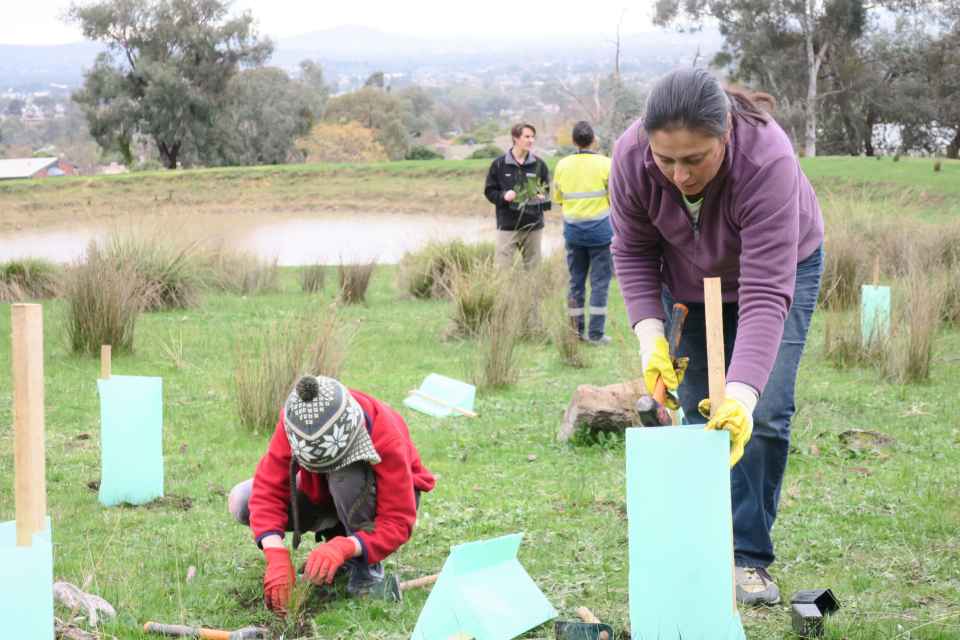
Planning is often what happens behind the scenes of landcare, but for Wodonga Urban Landcare Network it has become the foundation for achieving environmental outcomes at a landscape scale.
Supporting 18 member groups across north-east Victoria, the network has built a reputation for combining strategic thinking, strong partnerships and community-led action to tackle some of the region’s most pressing environmental challenges.
A standout achievement has been the development of the Wodonga Regional Waterways Action Plan, the first municipal-wide waterways plan in the region to be led by a community organisation rather than a government agency.
Developed in partnership with Wodonga Council and the North East Catchment Management Authority, the plan provides a shared framework for restoring waterways, improving biodiversity and directing investment across all 13 key waterways within the municipality.
The network’s impact can be seen across waterways, urban bushland, rail trails and conservation reserves. Between 2020 and 2025, volunteers from member groups contributed more than 56,000 hours of on-ground restoration work and planted more than 35,000 native grasses, shrubs and trees.
Through coordinated planning and support from the network, these individual projects contribute to broader goals around habitat connectivity, water quality and biodiversity conservation.
Collaborations with Traditional Owners, universities, local government, schools, community organisations and neighbouring landcare networks have supported initiatives ranging from threatened species conservation and citizen science to pest management and sustainable farming.
Working with 10 Landcare groups, more than 850 members and a broad range of partners, Bass Coast Landcare Network supports environmental stewardship across much of the Bass Coast region.
In 2025 alone, it facilitated the planting of more than 416,000 indigenous plants, established almost 24 kilometres of stock-proof fencing and delivered large-scale restoration projects that strengthened habitat connectivity, improved waterways and enhanced biodiversity.
From landscape-scale biolink projects and threatened species conservation to innovative mangrove restoration works and climatesmart agriculture programs, Bass Coast Landcare Network continues to demonstrate how strong partnerships can achieve environmental outcomes well beyond the capacity of any single organisation.
A commitment to evidence-based, landscape-scale planning has positioned South Gippsland Landcare Network as a leader in regional environmental stewardship.
Supporting 17 landcare groups across a 262,000-hectare region, the network combines community action, scientific knowledge and strong partnerships to address biodiversity decline, strengthen sustainable agriculture and improve climate resilience.
The network’s leadership in developing and implementing the South Gippsland Biodiversity Protection Plan has brought together government agencies, conservation organisations and community groups around a shared vision for the region.