
Victorian Landcare Magazine - Winter 2026, Issue 91
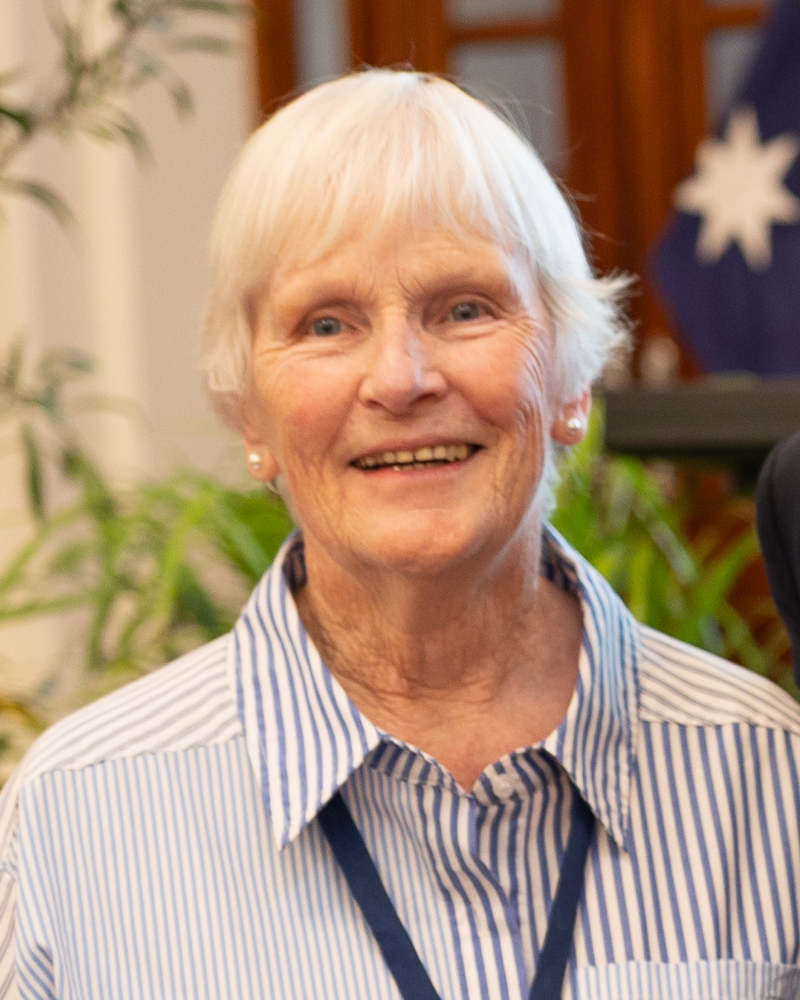
They called her “the roadrunner” because she was always on the move – up and down the Hume Highway, between farms, meetings and government offices.
Carrying an unshakeable belief in community, for Pam Robinson that nickname captures the energy and urgency of Landcare’s earliest days – when everything was new, unpaid and powered by people who simply “got it”.
“I was either down at the VFF talking to Heather Mitchell, or I was up talking to Joan Kirner,” Pam recalls.
“They were both fantastic women … totally different politics … but we all had a big sense of community. What mattered was what Landcare was going to do and how it would fit in the community.”
Pam’s story begins before landcare had a name.
In the early 1980s, while farming near Violet Town at the foothills of the Strathbogie Ranges, Pam and her neighbours noticed something strange. Patches of land where grass no longer grew, sheep licking the soil and rolling in it.
“We knew something was going on,” she said.
“So, we went to the Soil Conservation Authority and said, ‘look, what is this?’.”
What they were seeing was dryland salinity – not widely recognised at the time.
That local curiosity led to action, and soon Pam and others formed the Warrenbayne–Boho Land Protection Group, incorporated in 1983.
“We were already organising ourselves,” Pam explains.
“That was the point – it was grassroots. People getting off and doing something.”
It was also the beginning of Pam’s deep involvement in landcare‑style thinking: local leadership, practical action and strong connections between community and government.
Alongside her farming life, Pam served on local council, became involved in Women in Agriculture, spoke nationally on food and farming, and sat on early salinity and land management committees.
Those roles brought her into close contact with Joan Kirner and Heather Mitchell at a critical moment.
“If they could work together with their different politics, then communities could too,” Pam said.
When landcare formally emerged in the mid‑1980s, the group Pam helped establish was acknowledged as a precursor. They were encouraged to change their name from ‘land protection’ to ‘landcare’ but declined.
“We said no. We’d take on the landcare themes – that was already what we were doing – but this wasn’t about ticking a box. It was about a community who had already established a group.”
Pam went on to contribute to the first landcare group development materials, chair committees at state level, and serve on both the inaugural Victorian and National Landcare Advisory Committees.
Looking back, she describes it as “a very exciting time”.
“You didn’t get paid … your hand was always in your own pocket, but the work mattered.”
Now in her 80s and living in Melbourne, Pam remains actively involved in landcare.
She turns up to landcare activities, mentors students, speaks at events and joins groups wherever life takes her.
“Landcare is something you can take with you wherever you go,” she said.
“You pull some weeds, plant a few trees, meet people – and it’s a really good feeling.”
Her hope for landcare’s future is simple and grounded in the same values that set her running all those years ago.
“We are actually nature ourselves,” Pam said. “We are part of it not apart from it. And if we keep working together, generously, that’s where landcare will always be strong.”