Victorian Landcare Magazine - Winter 2026, Issue 91
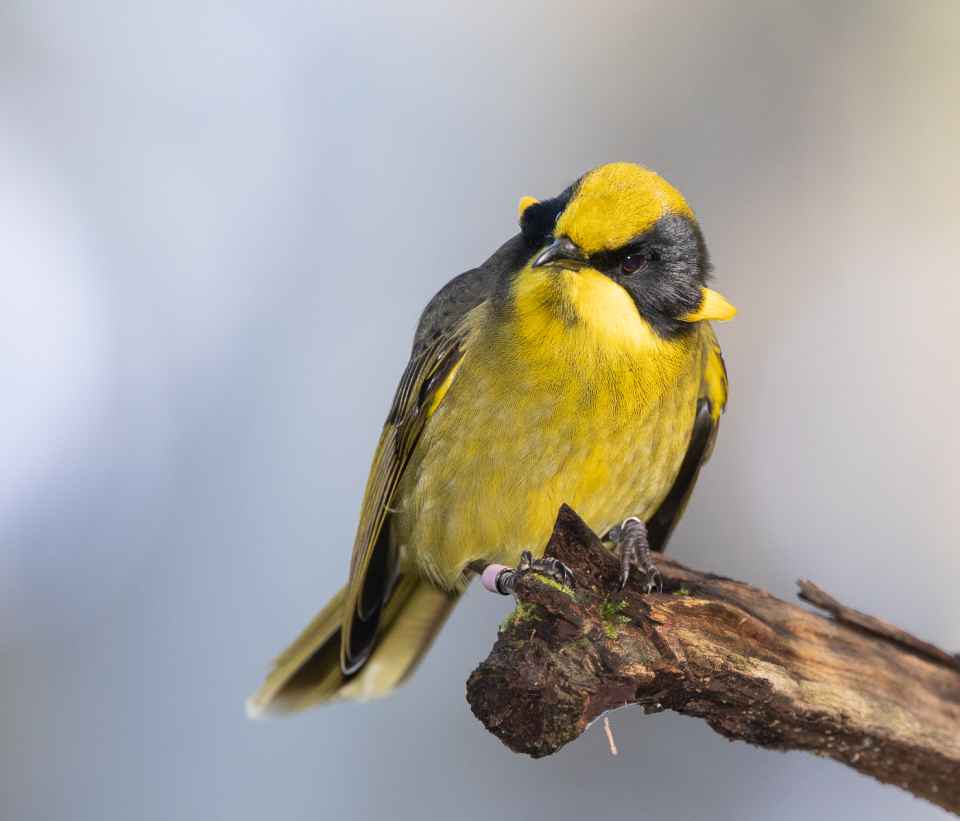
On a scorching afternoon in February 1983, bushfires tore through Cockatoo and Upper Beaconsfield. The fires caused terrible loss of life, livestock, and native animals.
For one small bird, it nearly meant extinction.
The Helmeted Honeyeater population had already been in freefall for a century. Once ranging from Healesville to Western Port Bay, it had lost more than 99 per cent of its ecosystem.
Dr Dan Harley, Threatened Species Project Officer at Zoos Victoria, puts it plainly: "We wiped out all their habitat. And as a consequence, populations declined one by one."
By 1980, only three populations remained. Ash Wednesday 1983 finished two of them.
A single wild population clung on at Yellingbo, in the Woori Yallock Creek catchment on Melbourne's urban fringe. By 1989, only 50 birds remained.
“When a species is confined to one location, it’s incredibly exposed,” Dan said.
“Bushfire, disease – one event can wipe out the lot.”
That year was a pivot point.
The Helmeted Honeyeater is Victoria’s avian emblem. A recovery plan was written, the first for any Victorian species, with an ambitious goal: ten self-sustaining populations, totalling 1,000 birds.
Zoos Victoria launched a captive breeding program.
A formal multi-agency recovery team was established to coordinate efforts between the Victorian Government, Zoos Victoria, and community groups.
A picture appeared in a newspaper - a small yellow bird, a number – 50, and a notice of a public meeting. Richard Case was one of those who turned up.
“Part of it was a sense of duty,” he recalls.
“This bird was going extinct on the edge of Australia's second-largest city. If we couldn't save that, what exactly did we think we could save?”
The Friends of the Helmeted Honeyeater formed that night.
Their goal was simple: save the bird in five or 10 years.
No one imagined they would still be at it nearly forty years later.
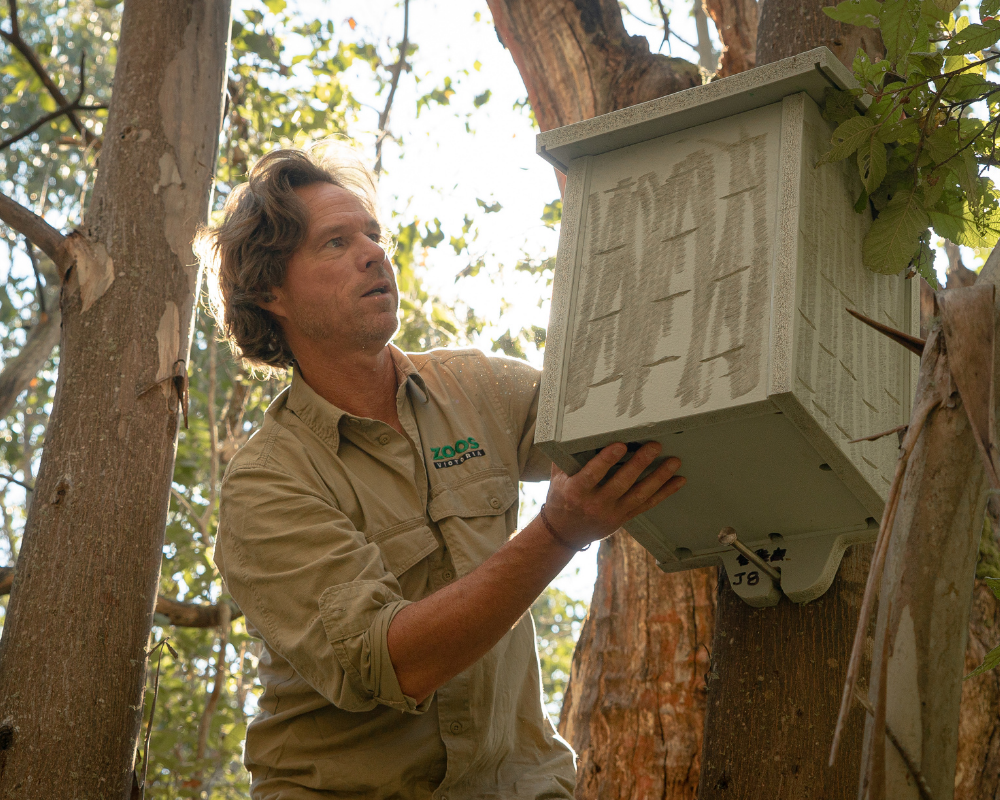
Above: Dr Dan Harley, Threatened Species Project Officer at Zoos Victoria, has worked with partners and volunteers for decades to help bring the Helmeted Honeyeater back from the brink.
Two steps forward, one back
The decades that followed were a story of incremental, hard-won progress and loss.
Volunteers planted thousands of trees along Woori Yallock Creek.
Zoos Victoria released captive-bred birds into the wild each year.
Science, genetics and hard truths.
With only 50 founders and decades of isolation, the wild population was inbreeding badly.
A carefully managed rescue program introduced birds from a related Gippsland population, restoring fitness without eroding the species' identity.
“The outbred birds – the 'super honeyeaters' – survive better and breed more successfully,” Dan said.
By 2020, for the first time in recorded history, more than 200 Helmeted Honeyeaters existed in the wild.
Living space
Success created a new problem. The birds had begun to outgrow their Yellingbo refuge.
The reserve couldn't carry the species' recovery indefinitely. More landscape and connectivity were needed.
In 2017, the Friends of the Helmeted Honeyeater invited the neighbours, Macclesfield Landcare, Johns Hill Landcare and Monbulk Landcare to join an initiative that became Beyond Yellingbo - focussed on strengthening habitat connectivity on private land surrounding the reserve.
It was a shift in scale and philosophy: from protecting a remnant to rebuilding a landscape.
With philanthropic and agency support, the project engaged more than 120 private landholders and coordinated habitat restoration across over 300 hectares.
New release sites in Warburton and Beaconsfield established new populations from genetically healthy founders.
For the first time since Ash Wednesday, the species was no longer confined to a single location.
In 2025, Nangana Landcare Network (which had formed from the Beyond Yellingbo project), won the Australian Geographic Nature Award, with $30,000 in funding, for saving faunal emblems.
“This award is not just recognition of work happening today – it is part of a relay,” Arabella Eyre of Zoos Victoria said when accepting the award.
“For more than 30 years, hundreds of people have carried the baton of conservation for Victoria's faunal emblems. We accept this Award with a clear responsibility: to keep going.”
Beyond Yellingbo also won the Australian Wildlife Society Community Wildlife Conservation Award 2025.
In the words of Beyond Yellingbo co-founder Dorothy Scott: “If it takes a village to raise a child, it takes a community to save a species”.
Keep going
With around 200 birds on three sites, the goal of ten populations and 1,000 birds lies some way ahead.
Nangana Landcare Network has initiated a community-led stewardship plan for 128,000 hectares across the Yarra Valley and Dandenong Ranges.
C411 Country - Natural Capital for Generations aims to embed biodiversity, regenerative agriculture and structured environmental investment into the fabric of a working landscape.
“The concept that species recovery should happen behind locked gates is the opposite of where we need to go,” Dan said.
“People are central to whether this species persists.”
It’s a sentiment Richard Case agrees with.
“The best thing has been people stepping up – again and again – and refusing to walk away,” he said.
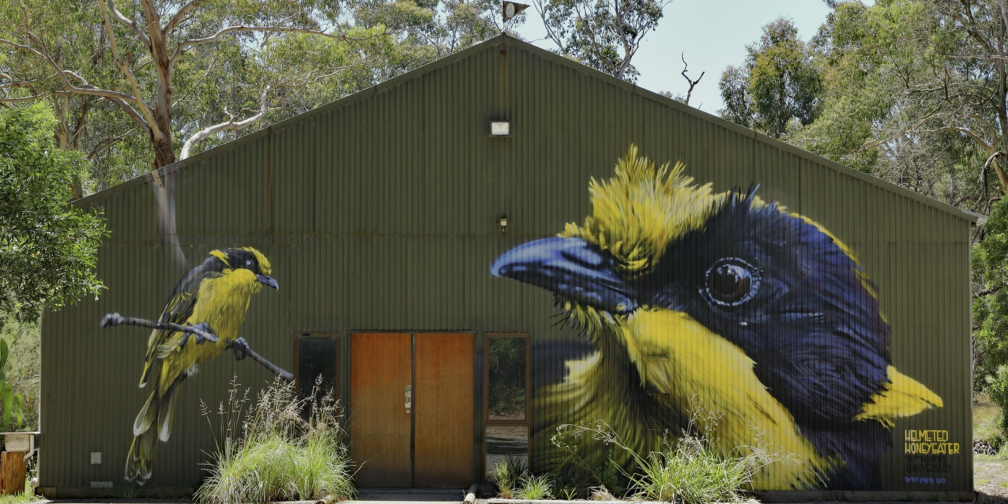
Above: Helmeted Honeyeater mural in Yellingbo, by artist Jimmy Dvate.