Victorian Landcare Magazine - Winter 2026, Issue 91
When the Nature Neighbours program started looking for presenters to help connect young adults with nature in Greater Shepparton, the Goulburn Murray Landcare Network (GMLN) saw an opportunity it couldn’t ignore.
The program partners with local organisations to encourage young people aged between 12-25 to get out into nature for their social and mental wellbeing through a fortnightly outdoor social group. It aims to foster a deeper connection to self, others and nature.
“We do a lot of education, both with adults and primary and secondary students. But that 17 to 25 age group is a bracket we don’t engage much with,” Dan Walker, Landcare Facilitator, GMLN said. “We just thought it’s too good an opportunity not to get involved.”
Lauren Barker, Clinician at headspace Shepparton, helped establish Nature Neighbours following the success of a similar pilot program developed in partnership with People and Parks Foundation’s Nature Scripts program.
“While we’re delivering this in a formalised, structured setting, the foundational idea of the interconnection of health, land and community is rooted in thousands of years of First Nations ways of thinking and knowledge-sharing,” Lauren said.
The program has seen a wide range of activities delivered including yoga, African drumming, creative journalling, walks out on Country with local Elders and nature walks with landcare.
Dan supports the program as a presenter, sharing expertise and making the local environment feel familiar and welcoming through evening sessions in nature across the Greater Shepparton region.
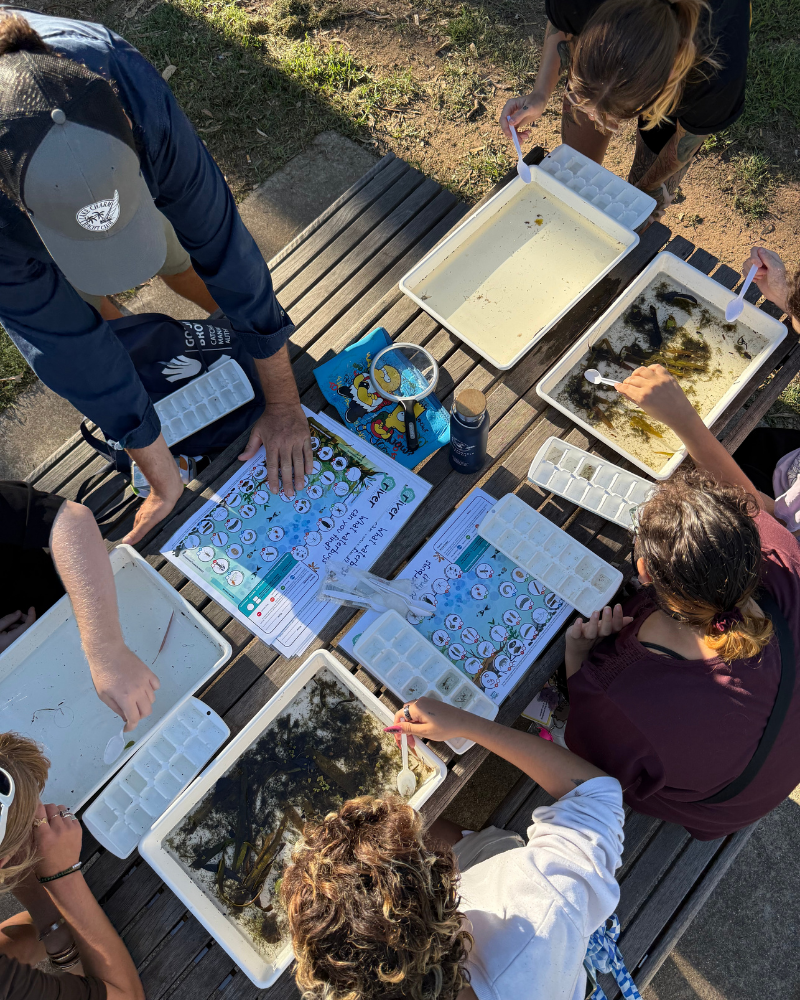
The format is intentionally relaxed and hands-on: participants sample aquatic macroinvertebrates, can compare what they find in a wetland and a nearby river, and talk about what those species can indicate about waterway health.
“We go collect some bugs, talk about them, talk about what they mean … then go for a bit of a walk and wrap it up,” Dan said. “We allow lots of questions and engagement.”
In the sessions, participants make connections between what they can see in a collection, and bigger ecological questions like why one location might be missing sensitive species, and what that could mean for the health of a river.
“We saw that a lot of the participants were initially drawn to the program’s social elements, but over time have also developed a love of the outdoors and have expanded their understanding of what mental health care can look like,” Lauren said.
The local knowledge held by Dan and the network has been of great benefit to the program, utilised during walks at Victoria Park Lake, the Shepparton Botanic Gardens and Reedy Swamp wetlands.
“Dan’s passion for the environment is infectious, and his sessions provide an opportunity for young people to expand their understanding of the natural environment in and around Shepparton.” Lauren said.
Alongside Lauren, Tone Jessup, Coordinator at Greater Shepparton Lighthouse Project, co-facilitates Nature Neighbours. For them, the partnership with GMLN has provided access to new ways of connecting young people to nature.
“Almost every young person that we’ve taken to Victoria Park Lake has been there before, but we’re zooming in on things they have never considered, like the health of the waterways and what people’s impacts can be on the lake,” Tone said.
“When we revisit places like the botanic gardens, where we’ve planted trees in a previous session, the participants get to see the literal growth from their actions, which is a great opportunity for reflection.”
The partnership has also been a full circle moment for Tone, allowing them to connect with their family on a deeper level.
“I grew up on an orchard farm in Toolamba just outside of Shepparton, and I remember this man teaching my stepfather about all manner of farm stuff. It wasn’t until we went to a landcare conference that I realised that he was a landcare member.
“Now I get to share the work we do with GMLN with my stepfather, and he understands the work I do through his personal landcare connection,” they said.
A review of the initial Nature Scripts program by the University of Melbourne reported improvements across measures such as life satisfaction, mental health and loneliness, and a cost–benefit estimate of about four dollars of benefit for every dollar invested into the program.
“Those cost benefits are obviously important, but being able to see a greater sense of belonging in community spaces where young people can feel unwelcome, and seeing it foster real, strong connections to nature has been so empowering,” Lauren said.
“We use this term a lot – environmental literacy – and that’s a big part of what landcare does,” Dan said.
Whether it’s insects or a plant … it’s increasing environmental literacy within our communities - Lauren Barker.
One of the realities of engaging new audiences is that outcomes can take time. So far, Dan hasn’t seen participants join a landcare group directly. But awareness is building, especially in a city like Shepparton, where many participants are new to the landcare story.
“At the sessions, no one’s heard of landcare before,” Dan said. “So it’s sowing the seed.”
During sessions, he introduces landcare, what local groups do, and how people can get involved when the time is right.
“All it takes is someone going ‘Oh look, there’s a landcare event happening, I remember looking at bugs with them and that was cool’ to get them on their way to joining a landcare group.”
In Shepparton, that pathway already exists. Dan points to the Shepparton–Mooroopna Urban Landcare Group, which runs regular working bees and mid-week activities.
Dan sees Nature Neighbours as a program that could be picked up by other communities, especially larger regional centres. The key ingredients are straightforward: local nature spaces, trusted youth and wellbeing partners, and Landcare members willing to share practical knowledge in an accessible way.
“There's potential for this to be rolled out anywhere landcare groups are operating, if we could secure some funding, landcare could quite happily adopt this program with other mental health providers.”
For groups looking to broaden their reach, the project is a reminder that sometimes the most important outcome is simply making landcare visible to people who haven’t encountered it before.