
Victorian Landcare Magazine - Winter 2026, Issue 91
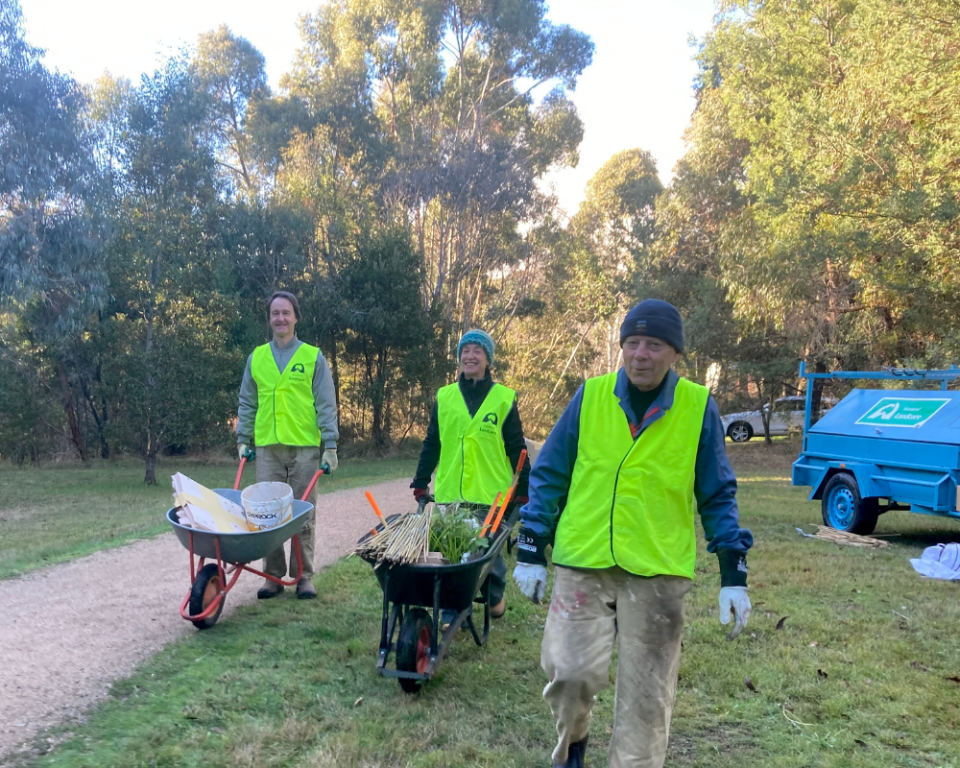
If there is one thing that sits at the heart of the Woodend Landcare group, it is not a single project or planting day, but a commitment that has quietly endured for more than three decades.
Over that time, methods have shifted, priorities have adapted, and community attitudes toward the environment and waterways have steadily evolved.
Yet, through all of this change, the core purpose has remained constant: to improve and care for the natural environment along the creek that runs through the middle of Woodend.
In the early years, the work was often practical and immediate – tackling obvious problems with the tools, knowledge, and resources available at the time.
As understanding of ecology deepened and broader environmental thinking emerged, so too did landcare practice.
What began as weed removal and tree planting gradually became more strategic, including revegetation to save the threatened local Black Gum (Eucalyptus aggregata), developing biodiversity corridors, habitat restoration, and an increasing awareness of how waterways function as living systems rather than simply a drain through town.
Each week and month, small groups of dedicated volunteers have continued to show up.
They chip away at weeds, plant seedlings and replace losses.
On any given day, the work might look modest – just a handful of people with gloves and tools – but over time those small actions have accumulated into something wonderful.
Thirty years on, the result is a rich, indigenous bushy corridor that winds through the town, offering both a safe place for wildlife and a respite for people.
The largest project was the removal of the poplar forest between Pyke and Bowen Streets between 2005 and 2007. At the time, it was a bold undertaking, replacing a long-established exotic landscape with a vision for a healthier, more resilient native ecosystem.
That project reflected growing confidence – not just within the group, but within the wider community – that long-term environmental change was possible and worth investing in.
Seeking funding has always been a challenge, however the group has managed to secure more than $130,000 through a wide range of sources over the years including the Bundaberg Rum Bush Fund, North Central CMA, Australian Government’s Envirofund, Victorian Government Landcare Grants, Victorian Junior Landcare and Biodiversity Grants, Macedon Ranges Shire Council community grants, Bendigo Bank community grants, Community Volunteers Action Grant (with the Threatened Species Conservancy) and private donations.
Over the years, community involvement has increased.
School groups, Girl Guides, Scouts, church volunteers, community organisations, corporate groups, and visiting corrections services crews have each played a role.
As the town grew new challenges emerged.
Living in a semi-urban setting within a rural landscape brought tensions – between pets and wildlife, bushfire risk and native vegetation, garden plants and invasive weeds.
Responding to these challenges required more than just on-ground work; it called for conversation and learning.
Education became a key part of landcare’s role, through guided walks, community events, and regular articles in The New Woodend Star, helping people understand not just what was being done, but why.
The current fauna discovery survey, funded through a Victorian Government Landcare Grant, has opened the door to a new cohort of people – those drawn in by a love of animals.
This has expanded landcare practice once again, from revegetation and conservation to include nest boxes, monitoring programs, and a stronger focus on habitat as a whole.
The message is simple but powerful: caring for wildlife also means caring for the vegetation that feeds, shelters, and supports it.
By 2025, more than 30,000 plants had gone into the ground across the town and surrounding reserves.
Only a fraction of these were trees; the majority were understorey and groundcover, reflecting a growing understanding of how ecosystems function.
Added to this was the Boxes of Habitat program, which extended Landcare’s impact well beyond organised planting days that are generally focussed on public land, and into private gardens, strengthening the environmental fabric of the wider community.
When visiting groups ask for guided tours, they often expect to hear about the biggest projects or the most visible changes.
Those stories are important, but what truly captures people’s attention is the continuity – the quiet persistence of a volunteer group who have stayed the course through successions of helpers, funding cycles, and environmental thinking.
The real achievement is not just what was planted or removed, but the culture of care that has grown alongside the vegetation.
As Nicole Middleton, current Woodend Landcare President said, “it’s the continuation and commitment of our landcare volunteers and support of the community that is the key to our success”.
It turns out that the old saying holds true. In landcare, as in nature, slow and steady really does win the race.
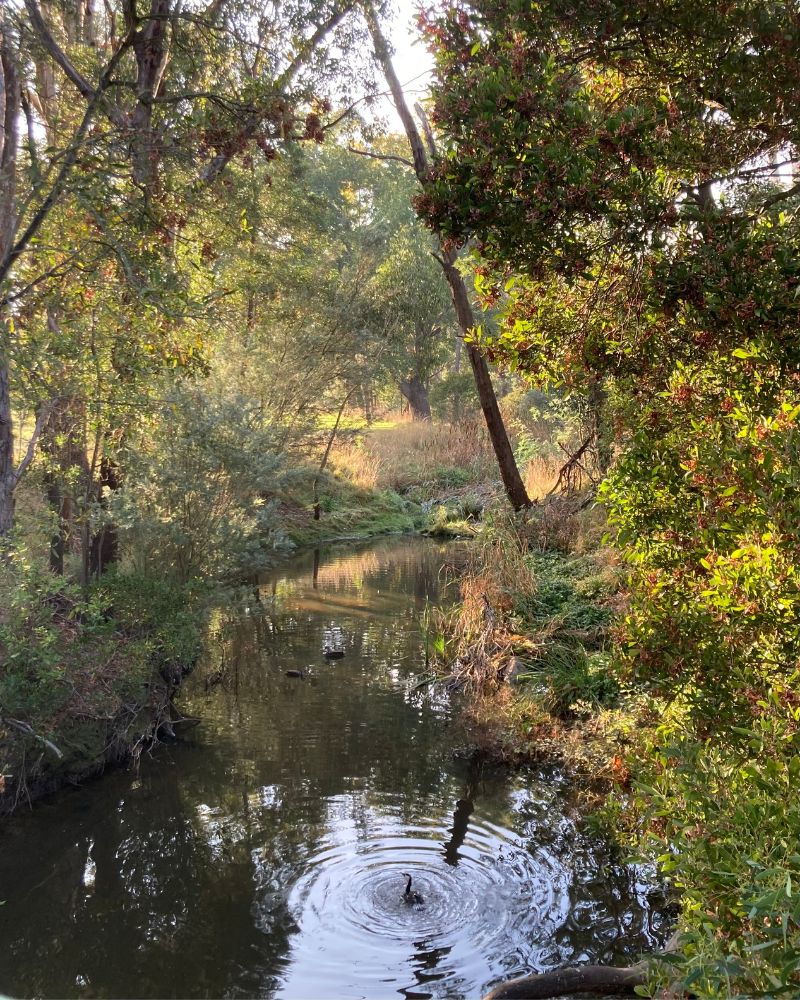
Above: Five Mile Creek, Woodend, is a picture of health, with birdlife including this Black-faced Cormorant.