
Victorian Landcare Magazine - Winter 2026, Issue 91
When foxes decimated the Middle Island little penguin breeding colony in 2006, the population was reduced to just seven birds.
The tragedy sparked what would become one of Australia’s most innovative conservation partnerships, developing techniques and lessons now flowing out to affect conservation efforts around the country and beyond.
Middle Island lies just a few hundred metres off the foreshore of Warrnambool in Victoria’s southwest. The small island is home to one of the few remaining breeding colonies of the little penguin (Eudyptula minor) in Victoria.
In 2005, foxes swam to the island at low tide and went on a killing spree, reducing little penguin numbers from more than 600 to less than 10. The shocking event drove the creation of the Middle Island Project to protect the little penguin colony from further fox and dog attacks. The project brought together the Warrnambool Coastcare Landcare Network, Warrnambool City Council, Deakin University’s Warrnambool campus, and Parks Victoria.
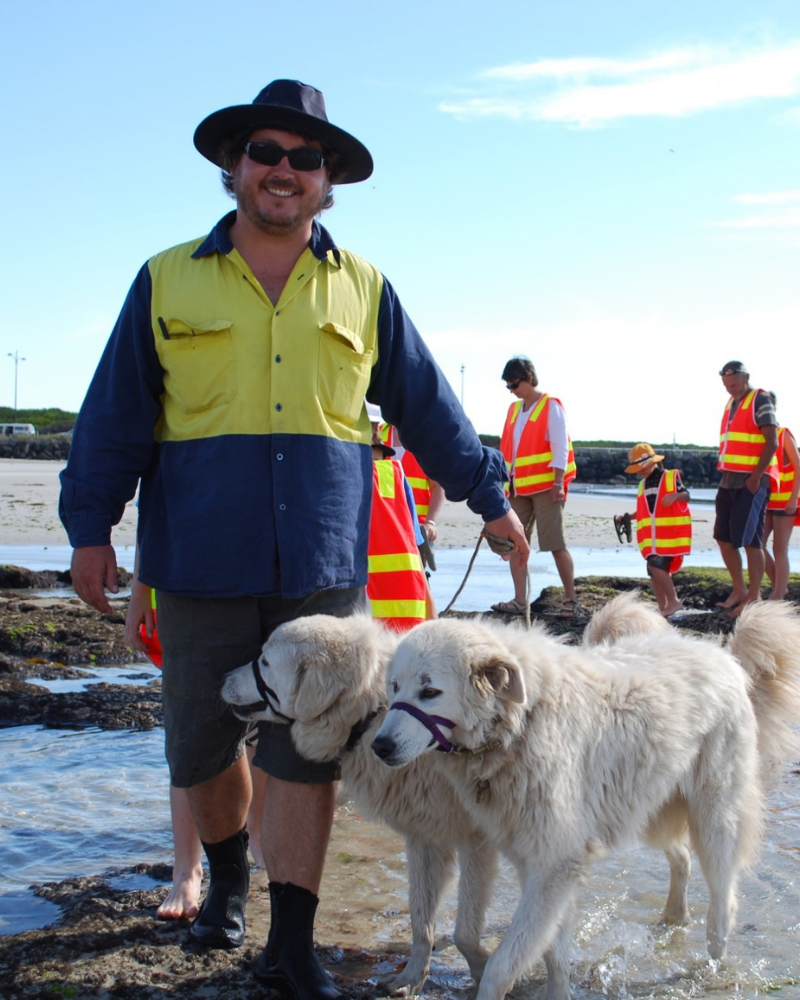
At the suggestion of Dave Williams, a network member working for a local free range chicken farmer who used dogs to guard his flock, the project introduced Maremma guardian dogs to the island to protect the penguins.
“The thinking was that penguins were just like chickens in dinner suits, so if it worked for chickens, it could work for penguins,” network chair Bruce Campbell said.
The nascent project borrowed some of the chicken farmer’s Maremmas – a dog specially bred to protect livestock – and introduced them to the island to see what would happen.
“Dave took the dogs over to the island and actually slept with them over there to see if the foxes were deterred,” says Bruce. “It was determined that they were, and that was the beginning of the Maremma penguin project."
As the project team learned more about the dogs’ deterrent effect, the process evolved into taking the dogs over to Middle Island for a few hours at a time to leave their scent around the penguin colony, doing the same along the beach nearest the island.
The Maremmas quickly showed their worth, and by 2011 the estimated little penguin population on the island had recovered to 182.
But despite the success, the project has faced several major setbacks. Access to the island is often limited by rough seas, and on several occasions foxes and wild dogs have made it to the island before the project team has been able to refresh the Maremmas’ scent.
Community engagement has been a key part of the project. Since 2006, around 2,000 volunteers have participated in population counts on the island, and this sustained community engagement strengthened local commitment to conservation.
“The way the project was run was codified into ‘the Warrnambool Method’ so it could be picked up by other scientifically-minded conservation projects,” says Bruce. “It was written up as a paper by researchers at Deakin University and Federation University, along with the Network and Warrnambool City Council.”
The future for the Middle Island project will also be about exploring new ideas, according to Bruce.
“We’re thinking about using remote sensor camera and audio equipment to do some of the monitoring for us,” he explains.
Looking ahead, the Warrnambool Coastcare Landcare Network hopes to apply the citizen science models it developed for Middle Island in new projects.
Through its setbacks, the Middle Island Project has demonstrated that persistence through setbacks, willingness to adapt methods, and investment in community participation create value that ripples outward far beyond an individual project’s footprint.
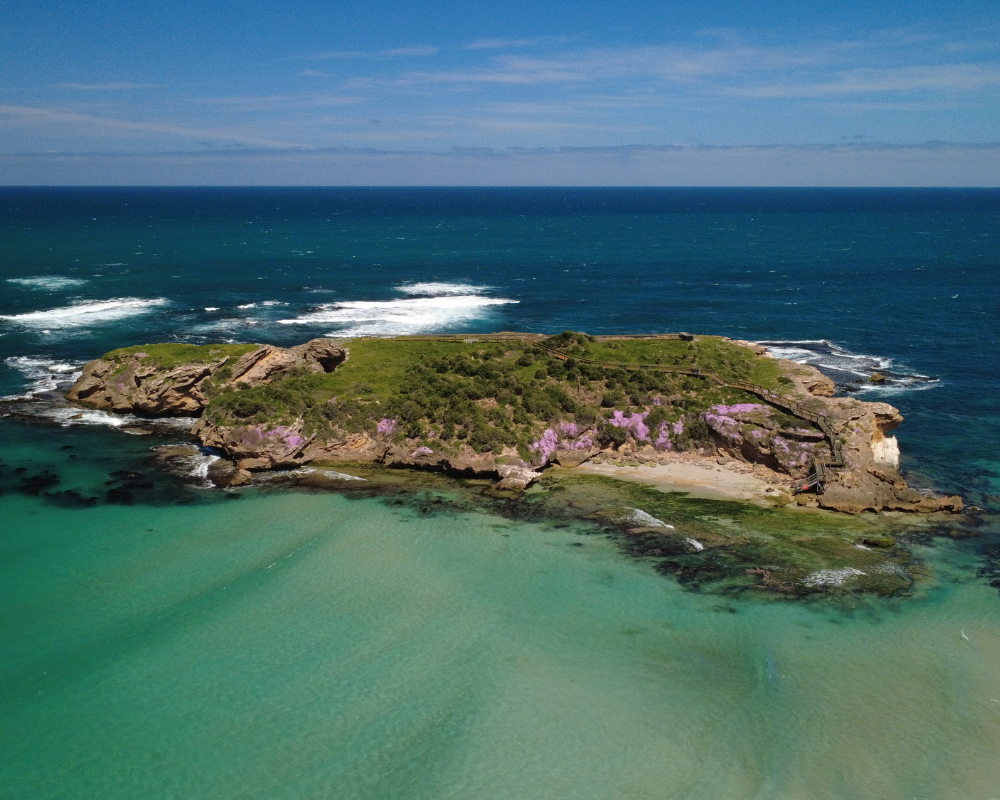
Above: Middle Island’s pink flowers in bloom. Photo: Warrnambool City Council.