Victorian Landcare Magazine - Winter 2026, Issue 91
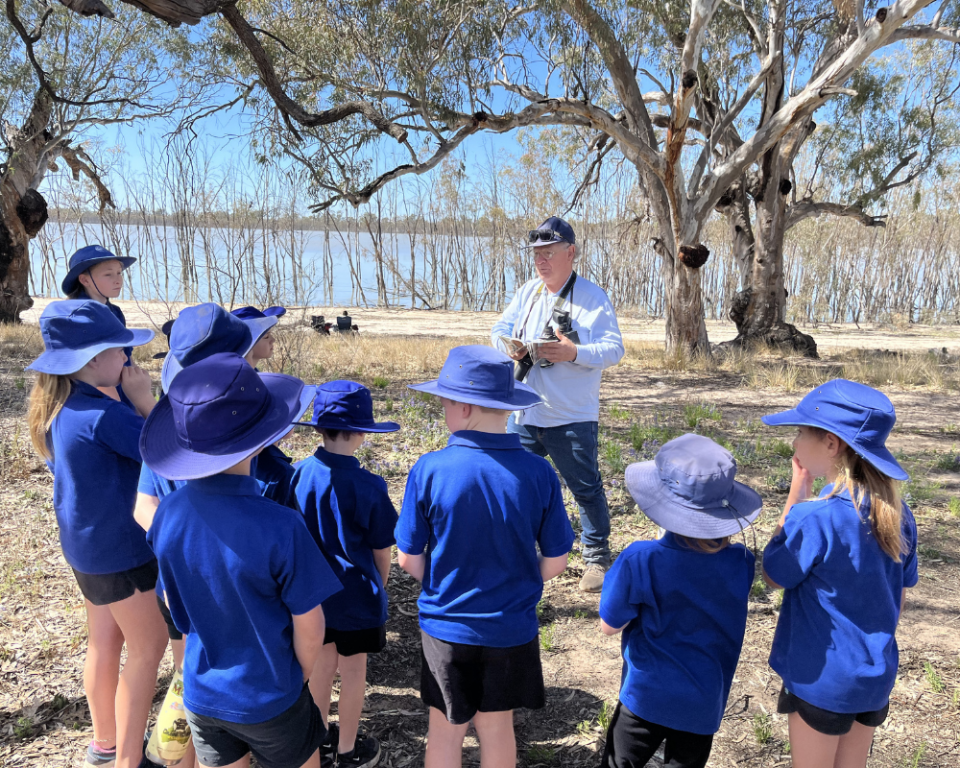
Across the vast, wind-shaped landscapes of north-west Victoria, where red sands meet resilient communities, landcare is a mainstay of grassroots action and innovation redefining what can be achieved in a modern farming environment.
Covering more than 1,085,000 hectares, the Mallee Landcare Group is the largest landcare network in Victoria. Since its formation in 1990, it has built a reputation not only for its scale, but for its enduring commitment to sustainable agriculture, environmental stewardship, and community resilience.
With more than 160 volunteer members spread across towns including Speed, Tempy, Walpeup, Ouyen, Patchewollock, Underbool, Nandaly, Mittyack and Hattah, the group reflects the diversity and determination of the region it serves.
Community-led sustainability
At its core, Mallee Landcare exists to support the natural environment while educating the community on best practice land management, with a deeply collaborative model.
Volunteers work side-by-side with schools, local councils, agribusinesses and community organisations to tackle the region’s most pressing natural resource management challenges.
Partnerships are central to the group’s success, continually evolving and opening new pathways for knowledge sharing and joint problem-solving.
From working with community groups like Ouyen men’s shed and historical society, to engaging with agricultural leaders like North West Ag and Lamattina’s Carrots, the group has built a network that bridges tradition and innovation.
The group also has a strong commitment to educating the region, having facilitated training on everything from farm chemical use and pest control to governance and occupational health and safety.
Workshops extend beyond technical skills, addressing mental health and wellbeing in rural communities.
A standout example is the Mallee Mates Working Dog School, delivered by the Mallee Landcare Group, which cleverly integrates resilience coaching into practical, hands-on learning.
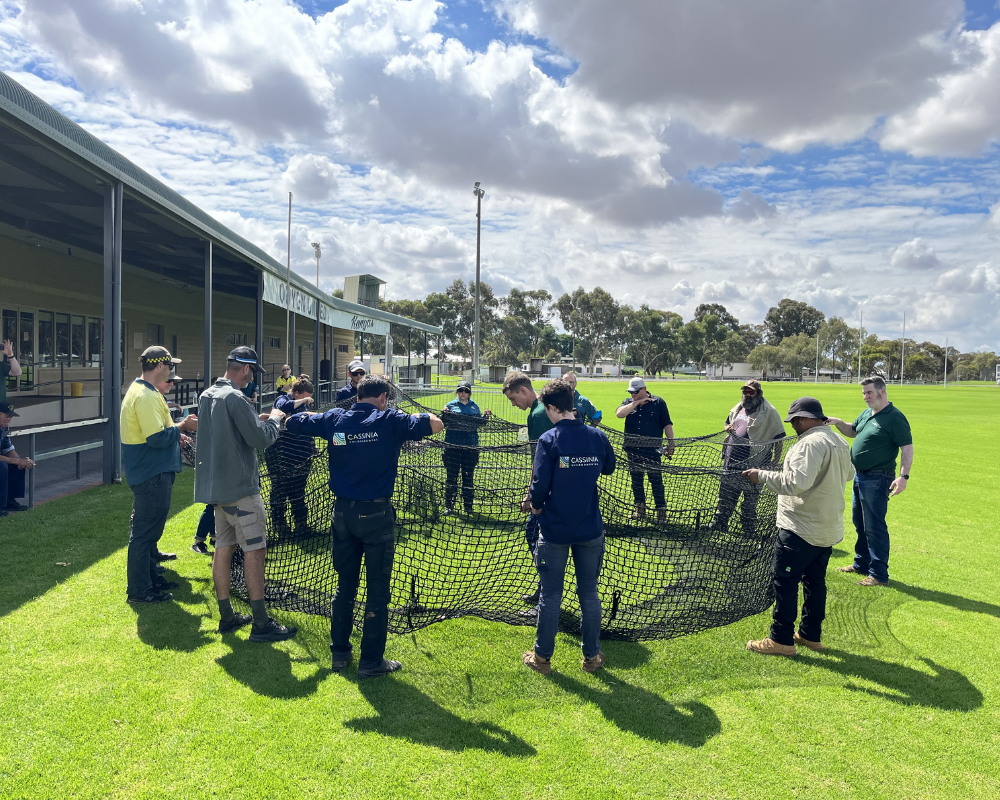
Above: The group held a pest animal workshop in March at the Ouyen football ground.
It reduces isolation in the region by building trusted peer networks, resilience and community around shared learning and local support through a central focus on working dog training.
Nurturing the next generation
Mallee Landcare’s commitment to long-term change is perhaps most evident in its work with young people.
Collaborations with Tempy and Underbool primary schools and Ouyen P-12 College have brought environmental education into the classroom and out into the field.
One of the most inspiring initiatives is the Malleefowl Project at Tempy Primary School. The project has won various accolades, including from the Junior Landcare Awards and the Keep Australia Beautiful campaign.
Supported by the landcare group, students have taken an active role in restoring degraded habitats and building wildlife corridors to protect the threatened Malleefowl. Beyond conservation outcomes, the project fosters a sense of stewardship and demonstrates that even small communities can make a meaningful environmental impact.
Changing agricultural landscapes
Farming in the Mallee is changing rapidly.
The shift toward continuous cropping, the consolidation of farms into larger operations, and the rise of automation have transformed how land is managed.
With fewer staff and increasing workloads, farmers are facing pressures to remain productive while adapting to new environmental and economic realities.
Information flows have also shifted. Where farmers once relied heavily on peer networks and local knowledge, many now turn to agronomists and digital platforms for advice. In this context, landcare’s traditional role as an information broker is evolving into something more dynamic: a facilitator of access, innovation and practical solutions.
The tool library
One of the most effective ways Mallee Landcare has responded to these shifts is through its extensive tool library; a shared resource that embodies the group’s focus on both economic and environmental sustainability.
The origins of this model date back to the 1990s, during the Wimmera Mallee Pipeline Project.
Recognising that individual farmers could not justify the cost of specialised equipment needed for a short-term transition, the group purchased a pipe layer to share among members.
Over the years, the group has invested in a wide range of equipment available for members to borrow.
This includes rabbit rippers and bait carts for pest control, grader boards, specialised tools for dune reclamation and erosion repair, and a hydraulic Chatfield tree planter for large-scale revegetation.
The library allows landholders to trial new practices without significant upfront investment, supports coordinated landscape-scale action, and generates income to sustain the group’s activities.
It is a clear example of how practical support can drive meaningful practice change.
Strong governance, fresh energy
Behind these initiatives lies a well-structured organisation with strong governance and a wealth of expertise.
Members bring skills in project management, accounting, compliance and facilitation, ensuring that projects are delivered effectively and safely.
Importantly, the group is also embracing generational change.
At its 2025 annual general meeting, a new, younger committee of management was appointed, bringing fresh ideas and energy.
The transition has been carefully managed, with experienced leaders such as retiring chair Leonard Vallance and treasurer Karen Crook continuing to mentor the new committee.
This blend of experience and innovation positions Mallee Landcare well for the future. It signals a willingness to adapt in landcare groups not just in farming practices, but in leadership and organisational culture.
Looking ahead
As climate pressures intensify and agricultural systems continue to evolve, the role of groups like Mallee Landcare will only become more critical.
Their ability to connect people, share resources and foster practical change offers a blueprint for resilience in rural communities.
Mallee Landcare’s story is ultimately one of adaptation. It has built a community that understands its landscape, embraces change, and works collectively to secure a sustainable future. In a region often defined by its challenges, that spirit of collaboration and innovation may be its greatest asset.