
Victorian Landcare Magazine - Winter 2026, Issue 91
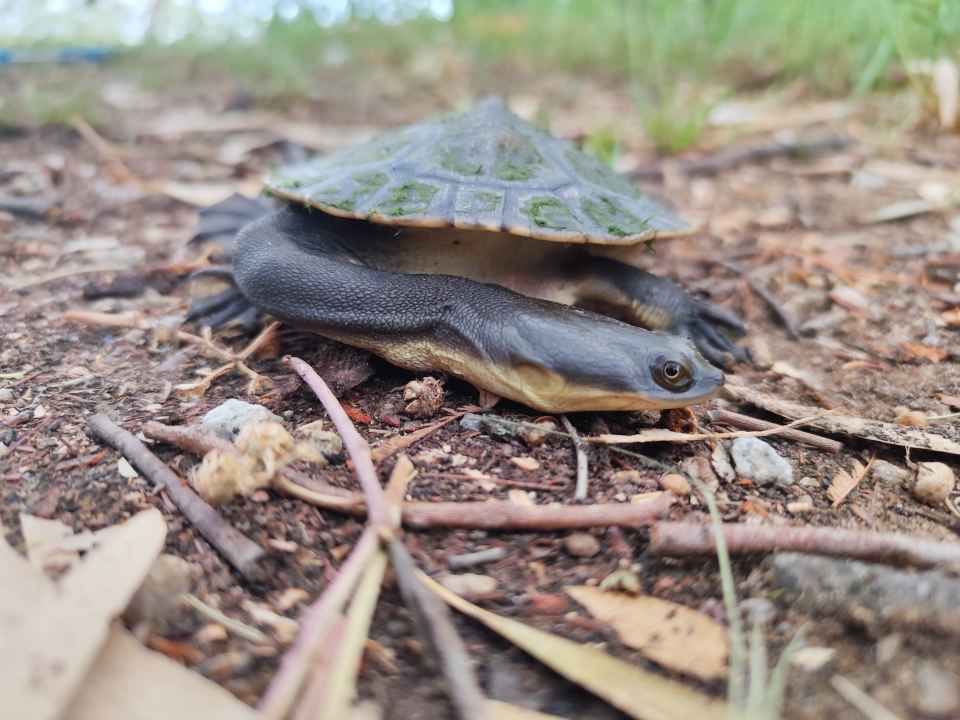
Along the Murray and Kiewa Rivers and their wetlands, a dedicated group of volunteers is giving freshwater turtles a fighting chance – and building the science and community connections to sustain that work long into the future.
Stand at the edge of Ryan’s Lagoon on the outskirts of Wodonga on a warm spring evening, and the water can seem almost still.
But look carefully and you might catch the slow arc of a turtle surfacing — a moment that speaks to both the richness of this place and how much its future depends on the community of people watching over it.
Turtles Albury Wodonga (TAW) was established in 2016 to protect three freshwater species that call these waterways home: the eastern long-necked turtle, the Murray short-necked turtle, and the broad-shelled turtle, a large, shy animal that spends much of its life on the bottom of deep water, rarely venturing onto land.
The group operates as part of Wodonga Urban Landcare Network (WULN) and brings together volunteers, researchers, Traditional Owners, and wildlife carers in a shared effort to protect animals that are all too easy to overlook.
Albury-Wodonga is one of the fastest-growing regional centres in Australia.
That growth brings opportunity, but it also brings more roads, rooftops and pressure on the wetlands and waterways that wildlife depend on.
Belvoir Lagoon at Sumsion Gardens, Ryan’s Lagoon, and Maloney Wetland sit within or alongside rapidly developing urban fringes – making the conservation work happening in and around them even more critical.
Foxes thrive in these transitional landscapes, and are devastating for turtles.
They have destroyed more than 90 per cent of freshwater turtle nests in parts of the Murray River basin.
In some areas, eastern long-necked turtle, Chelodina longicollis numbers have fallen by nearly 70 per cent.
Two of the three Murray River basin species, Murray Short-necked Turtle Emydura macquarii and the Broad-shelled Turtle Chelodina expansa are now listed as threatened.
Turtles that survive to adulthood can live for decades, meaning population declines are slow and easy to miss, until the damage is already done.
Roads add another layer of risk. Female turtles travel overland to find nesting sites, often crossing busy streets.
TAW volunteers respond to callouts when turtles are spotted in danger, and have worked with Staghorn Wildlife Shelter and Kangaloola Wildlife Shelter to rescue and rehabilitate animals struck by vehicles.
Ten rehabilitated turtles were released back into local waterways last year alone.
The good news is that with careful planning, thoughtful urban design, and community education and support, wildlife can not only survive in these environments, it can recover.
When nesting season arrives each spring, TAW volunteers fan out across the region.
If a member of the public spots a turtle laying eggs, a call goes out and the group moves quickly, placing mesh cages over nests to exclude foxes.
The citizen science app TurtleSat, developed by researchers in NSW and Victoria, helps the community log sightings and keep track of where turtles are active.
This ground-level monitoring is essential. The more nests that are found and protected early, the better the chances of hatchlings making it to water.
Education is woven through everything the group does. TAW volunteers have delivered turtle talks at local kindergartens through programs like Turtles for Tots, bringing children face to face with these animals for the first time.
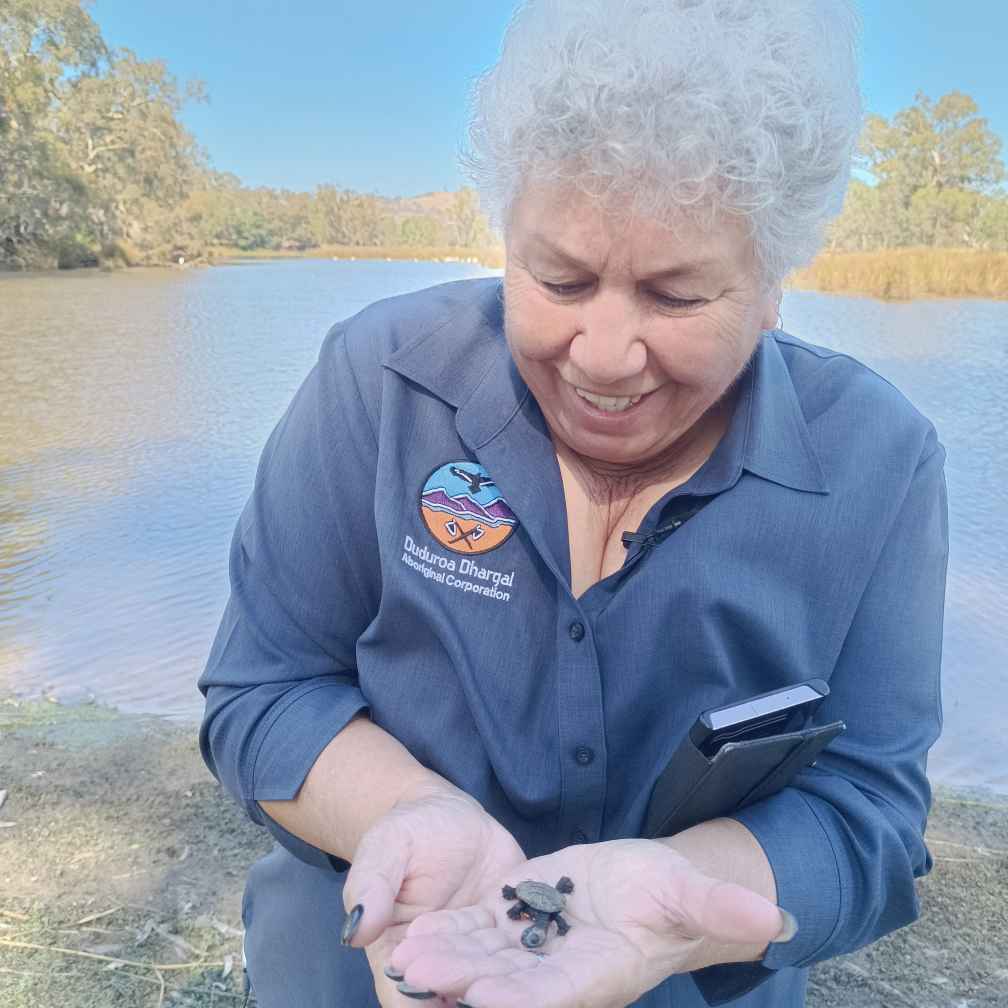
Above: Aunty Valda Murray with turtle hatchlings at Ryans Lagoon, Wodonga.
At events like the Riverside Vibes Festival, which drew more than 2,000 visitors last year, the group creates opportunities for the broader community to learn why healthy waterways depend on animals that most people never notice.
The WULN 2024 Landcare Award for Community Partnerships, presented at the group’s annual general meeting, recognised the collaborative conservation achievements TAW has built with researchers, wildlife carers, local councils, and First Nations groups.
At Ryan’s Lagoon, TAW’s work has grown into a meaningful partnership with local Elders, the Duduroa Dhargal Aboriginal Corporation, and La Trobe University researchers.
Freshwater turtles hold deep cultural significance as totem animals for First Nations communities in the region, and that connection shapes the group’s approach to the landscape.
Wildlife surveys, turtle tagging and joint revegetation projects, including a student-led planting that forms a turtle shape now visible on Google Earth, reflect what is possible when conservation science and cultural knowledge work side by side.
In 2024, TAW became a key partner in a research project turning heads in conservation circles.
Dr Lígia Pizzatto, a researcher at La Trobe University’s Centre for Freshwater Ecosystems, is leading a trial of conditioned taste aversion (CTA) — a technique that trains foxes to associate turtle eggs with nausea, so they leave nests alone.
Working with WULN, TAW, the Duduroa Dhargal Aboriginal Corporation, and other community groups from across north-east Victoria, the project is not replacing traditional fox control, but trying to add a new tool that is especially valuable in urban areas where lethal methods cannot be used.
The early results have been extraordinary.
At Mullinmur Billabong near Wangaratta, egg predation fell from 91 per cent to just 10 per cent within two weeks of conditioning beginning.
In areas where foxes were conditioned, predation stayed low throughout the nesting season, while in control areas with no conditioning predation increased by 39 per cent, demonstrating that foxes can be taught to leave turtle nests alone.
Despite the approach being more successful in some areas than in others, the team keep working to fully understand the limitations and best ways to deliver it.
More than 20 citizen scientists are now trained to participate in the ongoing experiments, monitoring real turtle nests during the main nesting season.
The project is funded in part by WIRES National Grant Programs and La Trobe University, with community involvement through citizen science designed to continue long after the research phase concludes.
Freshwater turtles have been part of Australian waterways for millions of years.
As scavengers, they play an essential role in keeping rivers and wetlands healthy, yet they remain largely unappreciated compared to their marine relatives.
TAW’s work is slowly changing that — one rescued turtle, one protected nest, and one curious child at a time.
In a region growing as fast as Albury-Wodonga, the group’s presence is a reminder that development and nature don’t have to be at odds.
Where communities choose to care for their waterways, wildlife finds a way.
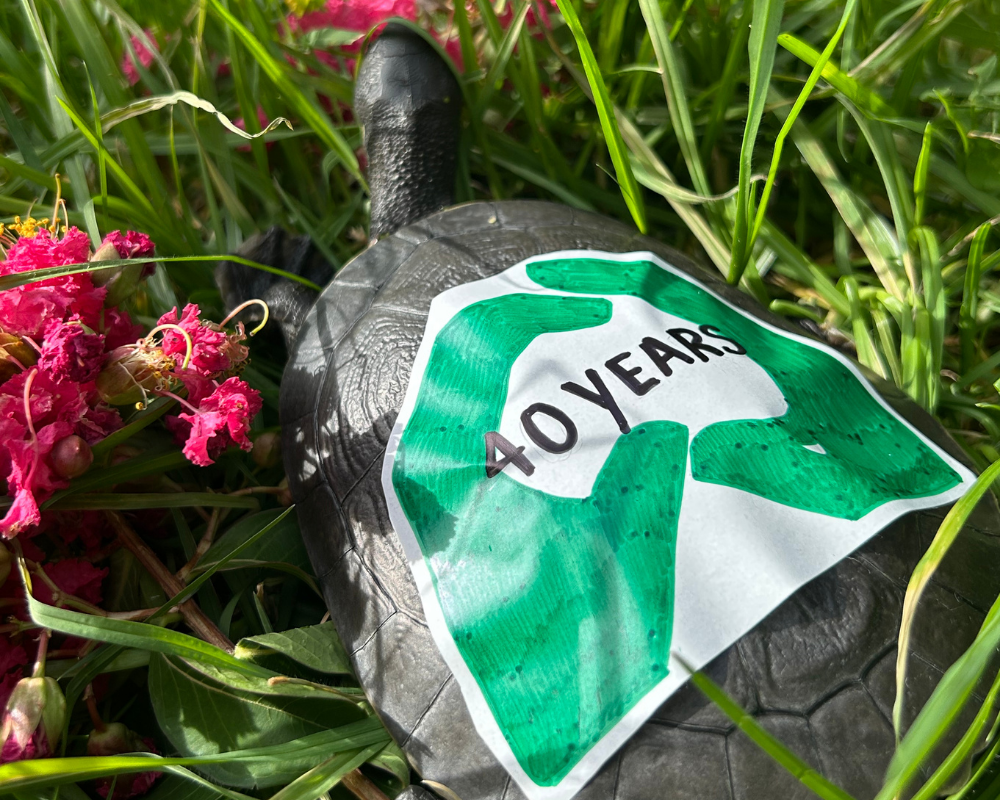
Above: Turtles Albury Wodonga uses innovative methods including conditioned taste aversion (CTA) to support the species. CTA teaches foxes to associate turtle eggs with nausea – helping reduce predation.