
Victorian Landcare Magazine - Winter 2026, Issue 91
Looking at the wooded hilltops or winding creek lines of the Wimmera today, you might not realise they haven't always looked this way.
Many of these thriving patches of green are the result of a pioneering generation of farmers who completely shifted how agriculture valued native habitat. They recognised tree plantings as assets for soil health, livestock protection, and farm resilience, but also habitat for the native birds and animals with which they shared the land.
Now, as Landcare Victoria celebrates its 40th anniversary, Wimmera landcare groups are looking back at some of the region’s pioneering projects to see how those early visions have transformed the land.
Project Platypus, a not-for-profit supporting landcarers in the Upper Wimmera, has teamed up with the Wimmera CMA and the Hindmarsh region Landcare Facilitator Jonathan Starks.
Their approach combines rigorous ecological data with personal stories and insights of the farmers who led the original plantings.
The revegetation sites being assessed all occur on working farms and were each established more than 20 years ago.
The work includes windbreaks, trees planted to stabilise soils on steep hillsides, and fenced-off and revegetated creeks providing clean water.
In a landscape of fragmented habitat, these places can also represent vital 'stepping stones' for native species.
They can provide safe refuge and crucial connectivity to other habitats, allowing wildlife to persist outside of pristine national parks and reserves.
The initial design choices of a revegetation project are key to its long-term success, not only as an asset for a resilient farm, but as a valuable link in connecting habitats.
To create practical recommendations for future revegetation in the Wimmera, local ecologists are working with landcare volunteers to learn how a site’s connection to surrounding native vegetation impacts its value as a habitat bridge.
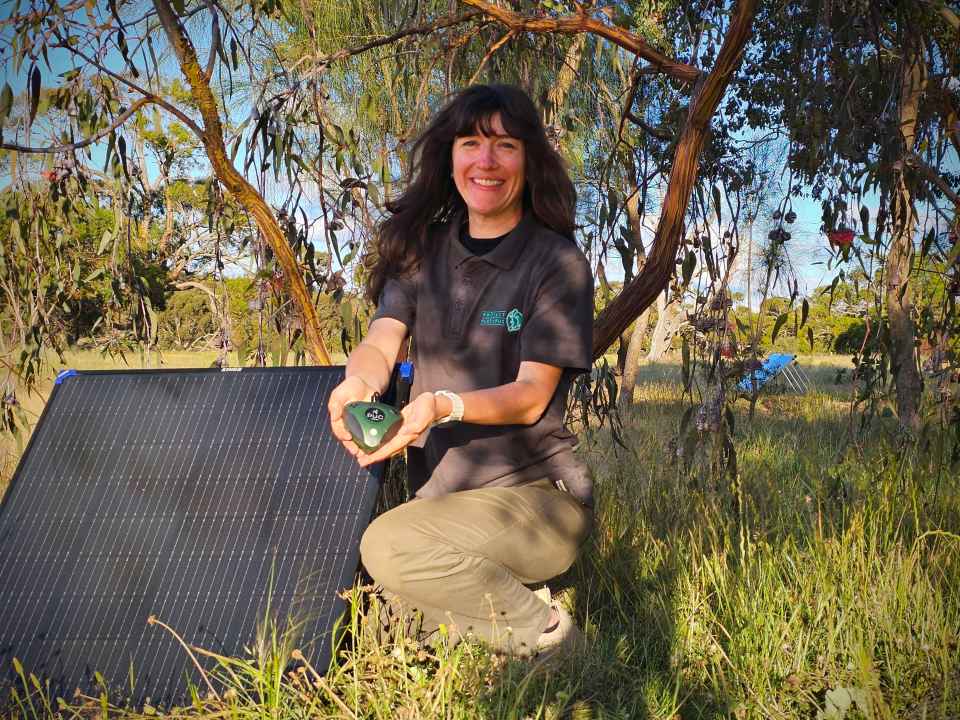
To get that data, we are rolling out some incredible new technologies, while still maintaining a human touch.
At each site, Jonathan Starks, also an expert birder, collects bird data with the assistance of solar-powered, off-grid acoustic monitoring stations to extend the collection window.
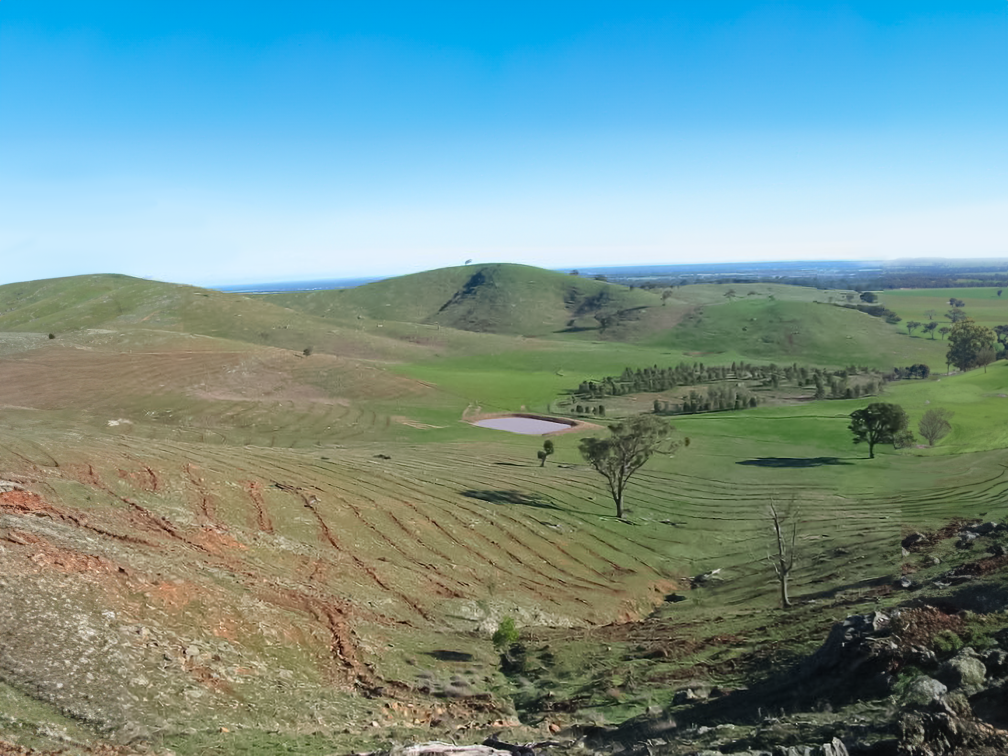
Above: Before and after: Tens of thousands of trees have been planted at Glendhu Station since the 1990s
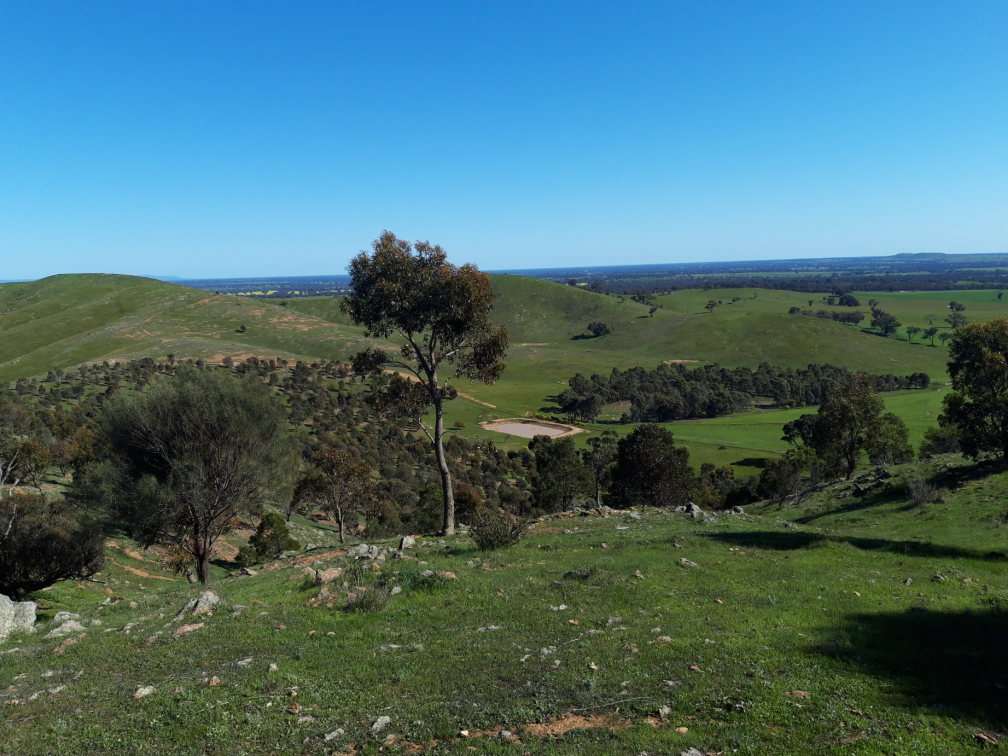
Above: Before and after: Tens of thousands of trees have been planted at Glendhu Station since the 1990s
These devices record audio in a continuous stream, and use artificial intelligence to identify bird species based on their calls.
Importantly, they also give each farmer a live feed of the birds calling within their revegetated places, right on their phone.
The early data has been extremely rewarding for the farmers who have put in so much work. At one of the sites – a shelterbelt on a working farm – acoustic monitors detected 28 different bird species in the first two days.
Across the sites we have already noted conservation-significant species like flame robins, mistletoe birds, yellow robins and gang-gang cockatoos.
These are not species that would survive in an open sheep pasture. They have returned because a farmer explicitly planted a place for them.
While the technology and the ecological data are exciting, the true heart of this project lies with the people who manage these places.
The farmers who planted these trees decades ago did so out of a deep-seated love for the local environment and a desire to heal the landscape.
At Glendhu Station and the Holden Farm, two of the Upper Wimmera’s earliest large-scale landcare planting sites, George Holden and Jack and Lyn Start all shared a vision to restore steep, eroding hillsides stripped bare of native vegetation. Planting with their own two hands and hosting large community efforts, these farmers have put tens of thousands of trees into the ground since the late ‘90s — including 13,000 planted at the Holden farm in a single community event. Today, those restored native spaces are lovingly tended by the families who helped create them.
For those who have moved off the farm after years of hard work, this project offers a chance to return and see how their efforts have been built upon. Rob and Debbie Shea were delighted to find that new owners Tim and Megan Shea and the Pilgrim family have continued and expanded the revegetation work they started.
This evaluation work has been a long time coming. It acknowledges the phenomenal effort of Wimmera farmers over the last 40 years, honouring the very foundation of the landcare movement.
It also will allow future farmers and landholders to make data-driven decisions that ensure the next generation of revegetation will be the highest-performing, most ecologically valuable sites yet.
To follow the progress of this revegetation evaluation program in the Wimmera, or to learn more about the history of our 'Places' over the last four decades, visit www.platypus.org.au.
Dr Elia Pirtle is the Upper Wimmera Landcare Facilitator, Project Platypus.
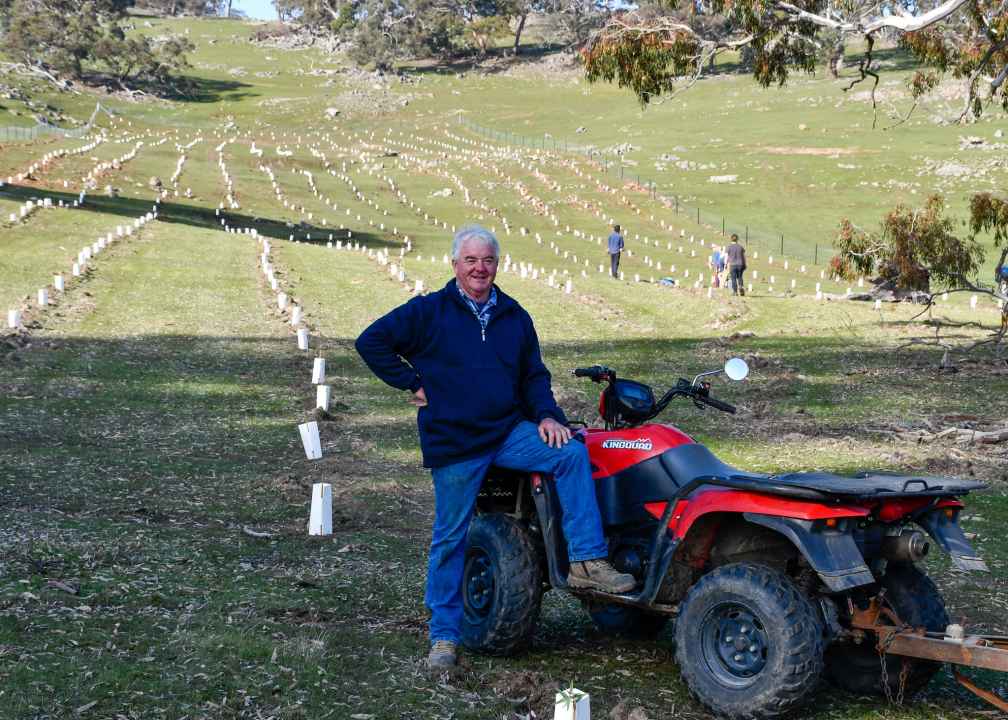
Above: Paul Harrington at one of the group’s planting sites.